

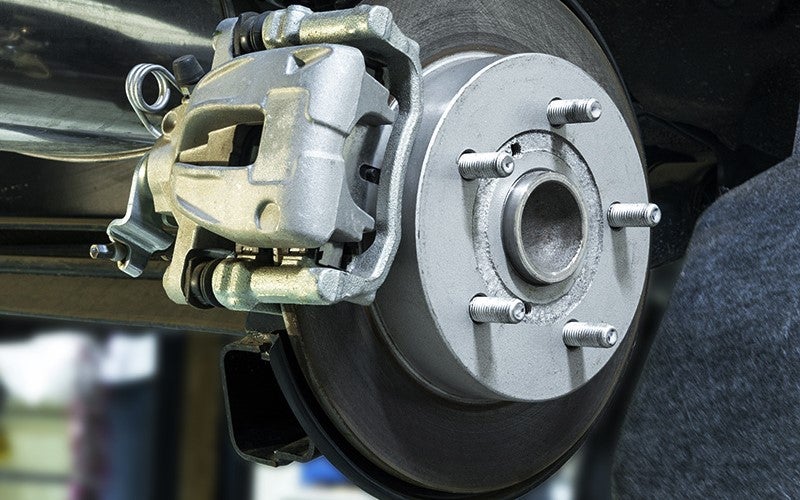
A Ford F-150® pulling a trailer and a Maverick® navigating downtown Macomb have different jobs. But when the driver presses the brake pedal, both depend on the same process: turning motion into heat through friction. It's an enormous amount of energy to manage, particularly when a vehicle is carrying additional weight. Routine brake service keeps that process predictable by identifying wear before it begins affecting how the vehicle responds.
Your Brakes Work Harder Than You Think
Braking seems simple from the driver's seat. Press the pedal, slow down. Mechanically, there's considerably more happening. Hydraulic pressure moves through the brake lines, calipers press pads against rotating discs, and friction converts kinetic energy into heat. Pads gradually wear, rotors experience repeated heating and cooling, and brake fluid absorbs moisture over time. Calipers also require attention because their moving components must operate freely. Ford engineers its braking systems for demanding conditions, but even robust hardware needs regular inspection.
A Proper Inspection Goes Beyond the Pads
Brake service begins with evaluating the entire system. A technician measures pad thickness, examines rotor condition, checks calipers for sticking or leaks, and inspects brake lines. Brake fluid level and quality are also important because contaminated fluid can compromise hydraulic performance. Depending on the findings, service may involve replacement pads, rotor work, or fresh brake fluid. Woodrum Auto also offers Ford Mobile Service for qualifying brake work, oil changes, battery checks, and tire rotations at your home or workplace.
Warning Signs Worth Listening To
A squeal during braking can indicate worn pads. Grinding suggests a potentially more serious problem, especially if friction material has deteriorated enough to damage the rotors. Vibration may indicate rotor trouble, while a soft pedal can point toward a hydraulic issue. Increased stopping distances and illuminated brake warning lights also demand attention. Ford Co-Pilot360 driver-assistance technology can help with certain driving hazards, but its electronic systems cannot compensate for neglected mechanical brakes. If braking performance changes significantly, arrange an inspection promptly.
Driving Conditions Determine Brake Wear
There's no universal replacement interval for Ford brakes. An Explorer® carrying passengers through stop-and-go traffic faces different demands from an F-150® regularly towing equipment. Frequent stops, added weight, and hilly roads increase the energy the brakes must absorb. An annual brake inspection provides a reasonable starting point, although unusual noises, pedal changes, or warning lights justify an earlier visit. The goal is to evaluate component condition instead of replacing parts according to mileage alone.
Small Problems Can Become Expensive Repairs
A worn pad doesn't operate independently. Allowing its friction material to deteriorate can damage the rotor, turning a relatively straightforward replacement into a more involved repair. Moisture-contaminated brake fluid can also contribute to corrosion within the hydraulic system. Catching these issues early helps preserve stopping performance and limits avoidable repair costs. Ford owners may also earn points on eligible maintenance, parts, and accessories through Ford Rewards.
Schedule Ford Brake Service at Woodrum Auto
Drivers around Macomb can visit Woodrum Auto for brake inspections, pad replacement, rotor service, and related maintenance. Schedule a service appointment to have your Ford's braking system evaluated, or ask about Ford Mobile Service availability for added convenience. Good brakes should make stopping feel completely uneventful, which is precisely the point.